Comparison
Local AI server vs cloud AI
When running an LLM on your own server beats calling a cloud API, and when it doesn't.
By James Drayson
In short
A local AI server runs an LLM on hardware you control, so data stays in and cost is fixed; cloud AI calls a model on a provider's servers, billed per token with data leaving your perimeter. Local wins on control, residency, and sustained cost; cloud wins on instant scale and zero upfront hardware.
When local wins
- Sensitive data: When prompts or documents can't leave your perimeter.
- Sustained usage: Heavy, steady workloads where per-token billing becomes expensive.
- Air-gap needs: Environments with no permitted external connectivity.
When cloud wins
- Spiky or low usage: Occasional workloads where you don't want to provision hardware.
- Fast experimentation: Prototyping before committing to infrastructure.
The cost crossover
Cloud per-token pricing scales with usage forever, while a local server is a fixed cost. At sustained enterprise volume there's a clear crossover after which owning a local server is substantially cheaper, and you keep the asset. See our on-prem AI cost guide for the breakdown.
Local AI server vs cloud AI
| Local AI server | Cloud AI | |
|---|---|---|
| Data location | Your perimeter | Provider's servers |
| Cost model | Fixed, owned | Per-token, recurring |
| Latency | Local, predictable | Network-dependent |
| Scales instantly | Limited by hardware | Yes |
| Air-gapped | Yes | No |
| Own the model | Yes | No |
What this looks like with Locai
Running AI locally means assembling hardware, a model and a serving stack that work together. Here is what it looks like when that arrives as one product.
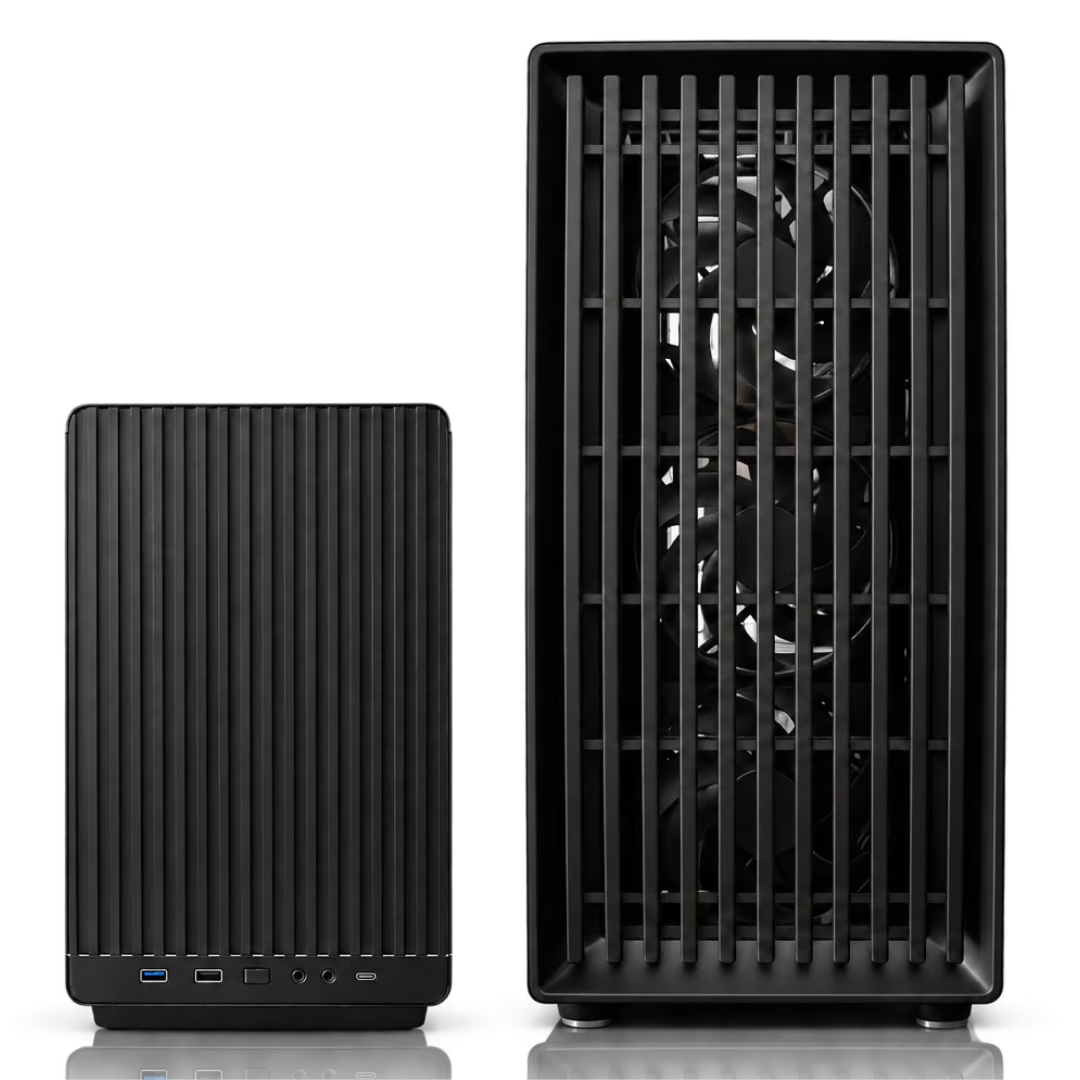
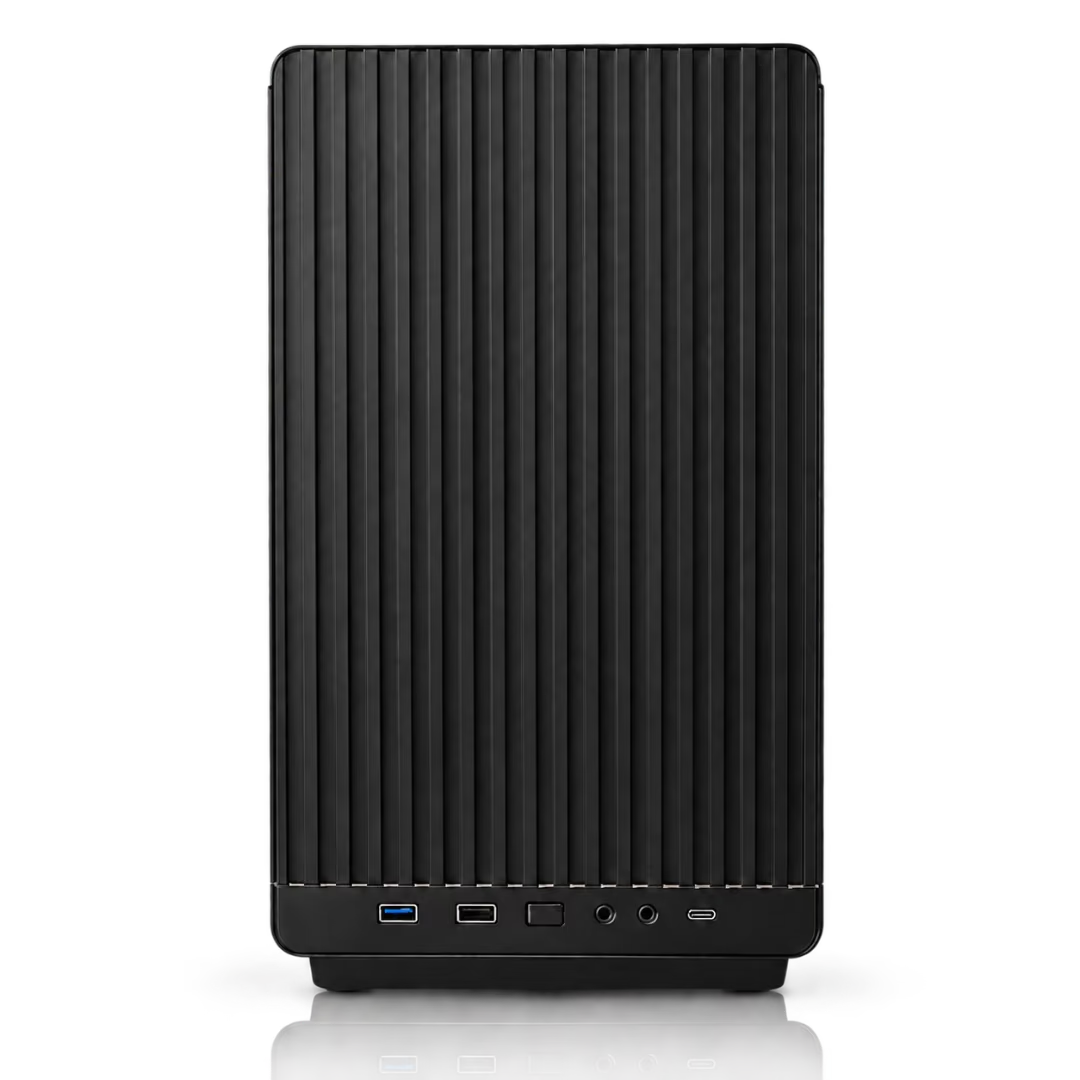
Locai Labs builds Locai One, an on-prem AI appliance. It is one machine that arrives with everything already in it: the hardware, our open-weight Locai Juno models, and Locai OS, the operating system that serves the models and handles users, access and monitoring. You plug it into a mains socket and your network, and your team is working in about 15 minutes. No cloud account, no per-token bill, and nothing leaving the building.
The reason a data-centre-class model fits in a box on your floor is SPACE, our compression algorithm. Instead of asking how much of a model can be cut while keeping it broadly similar, SPACE asks what the model needs to be good at, preserves the subnetworks behind those capabilities and strips back the rest. The result is a smaller specialist rather than a shrunken generalist, tuned to the exact hardware it ships on.
Locai One starts at £29,950 for a team, and Locai One Pro at £49,950 for an organisation, bought once and owned outright. Both run air-cooled on standard mains power and work fully air-gapped. Any compatible open-weight model runs alongside Juno, and if you need a model trained on your own proprietary data we can post-train one and deploy it on the same machine.
Frequently asked questions
Local vs cloud AI, which is better?
It depends on usage and sensitivity. Local wins for sensitive data, sustained usage, and air-gapped needs; cloud wins for spiky, low-sensitivity, experimental workloads.
Is a local AI server worth it?
For sustained enterprise usage, yes, the fixed cost typically beats years of per-token API fees, and you keep an owned, private asset.
Can I run an LLM locally?
Yes. Modern open models run on local GPU hardware; Locai One packages a sovereign model and serving as a turnkey local AI server.
What hardware do I need?
It depends on the model size and concurrency. Locai One ships with one NVIDIA Blackwell GPU and 96 GB of VRAM; Locai One Pro has two GPUs and 192 GB of VRAM. Larger models and heavier concurrency need more GPUs.
Book a sovereign AI briefing
A 30-minute session on owning your model: deployment options, the data path, and a clear cost range for your use case.