Explainer
On-premise AI for enterprise
Running AI inside your own data centre or on dedicated hardware, full control, predictable cost, and no data leaving your perimeter.
By James Drayson
In short
On-premise AI runs large language models inside your own data centre or on dedicated hardware you control, rather than calling a model over the internet. It gives enterprises full data control, predictable fixed cost, and the option to own the model outright.
Benefits of going on-premise
- Data stays in: Every inference happens inside your perimeter, so sensitive data never leaves.
- Fixed, predictable cost: An owned appliance replaces an open-ended per-token bill that grows with usage.
- Performance & latency: Local inference is fast and predictable, with no dependence on an external service.
- Ownership: Run a model you hold the weights to, and improve it continually on your data.
Making on-premise turnkey
On-premise AI used to mean building a serving stack and MLOps practice from scratch. Locai One removes that: it is a fixed-cost on-prem appliance that bundles a sovereign model, an application layer (chat, API, usage platform), and serving, so you get on-prem control without the integration burden. Hardware can run from a single GPU server up to multi-GPU nodes depending on model size.
What this looks like with Locai
Running AI locally means assembling hardware, a model and a serving stack that work together. Here is what it looks like when that arrives as one product.
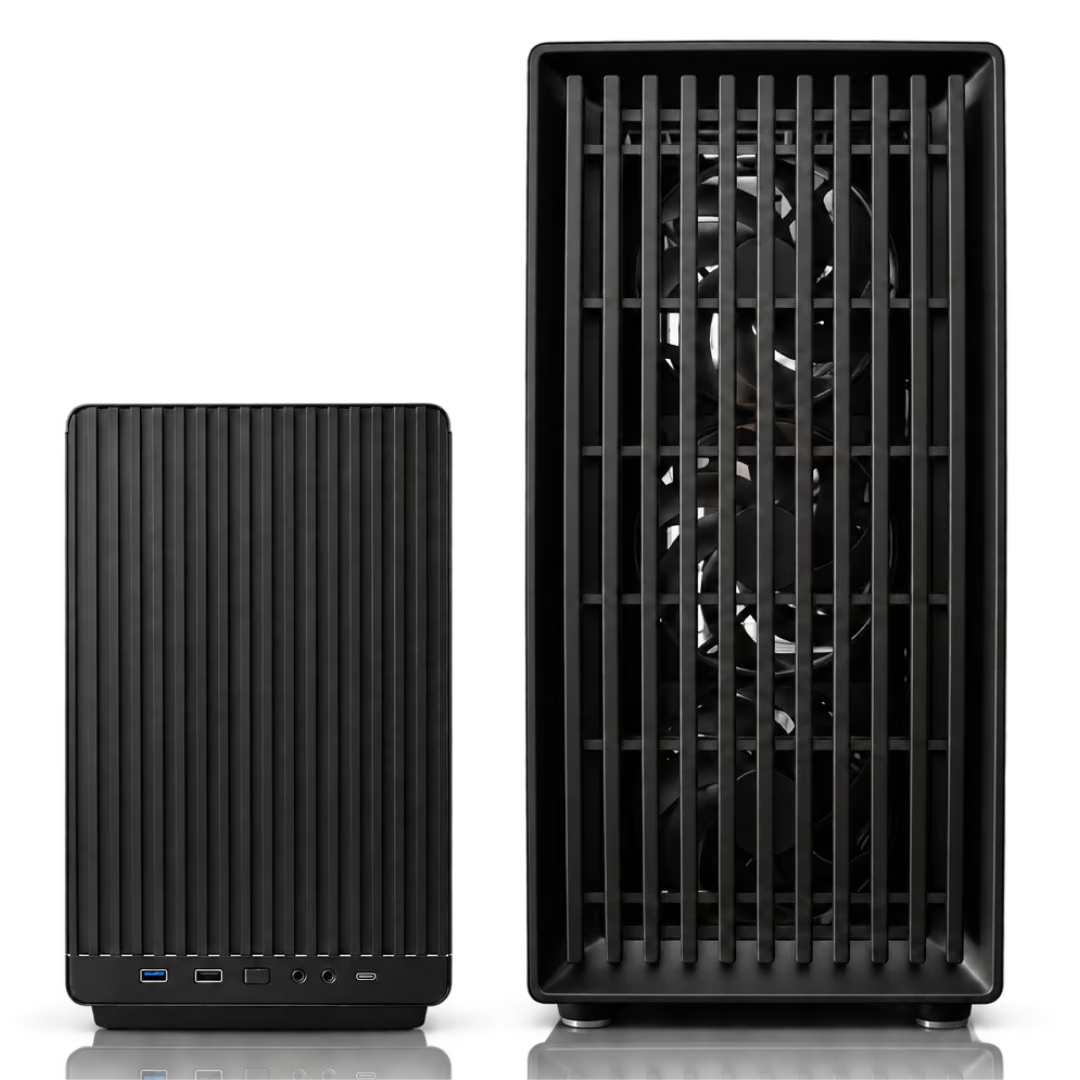
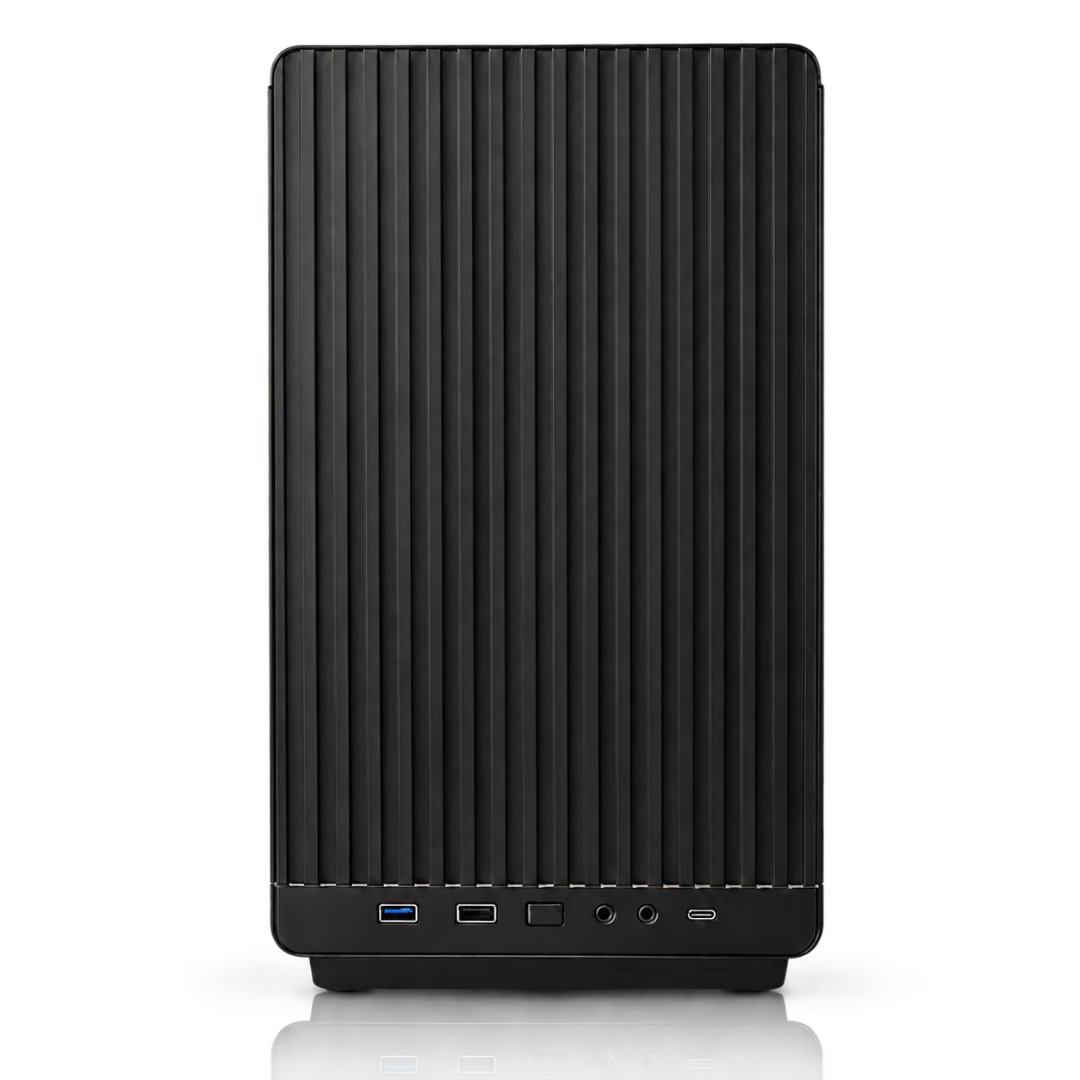
Locai Labs builds Locai One, an on-prem AI appliance. It is one machine that arrives with everything already in it: the hardware, our open-weight Locai Juno models, and Locai OS, the operating system that serves the models and handles users, access and monitoring. You plug it into a mains socket and your network, and your team is working in about 15 minutes. No cloud account, no per-token bill, and nothing leaving the building.
The reason a data-centre-class model fits in a box on your floor is SPACE, our compression algorithm. Instead of asking how much of a model can be cut while keeping it broadly similar, SPACE asks what the model needs to be good at, preserves the subnetworks behind those capabilities and strips back the rest. The result is a smaller specialist rather than a shrunken generalist, tuned to the exact hardware it ships on.
Locai One starts at £29,950 for a team, and Locai One Pro at £49,950 for an organisation, bought once and owned outright. Both run air-cooled on standard mains power and work fully air-gapped. Any compatible open-weight model runs alongside Juno, and if you need a model trained on your own proprietary data we can post-train one and deploy it on the same machine.
Frequently asked questions
What hardware do I need for on-premise AI?
It depends on the model size and your concurrency. Locai One ships with one NVIDIA Blackwell GPU and 96 GB of VRAM; Locai One Pro has two GPUs and 192 GB of VRAM. Larger models use multi-GPU nodes.
Is on-premise AI more expensive than the cloud?
There's an upfront investment, but for sustained enterprise usage the fixed cost of an owned appliance is typically far lower than recurring per-token API fees, and you keep the asset.
Can on-premise models stay current?
Yes. With continual learning the model is retrained on your evolving data on a schedule, so it keeps improving rather than freezing at deployment.
Book a sovereign AI briefing
A 30-minute session on owning your model: deployment options, the data path, and a clear cost range for your use case.